Successful fundraising doesn’t always look like record-breaking numbers or flawless campaigns. Sometimes it’s about keeping your program steady when everything around you feels uncertain.
Even in a challenging environment, organizations proved that progress is still possible when strategies are built with intention rather than urgency. And the fundraising lessons we learned in 2025 will shape how teams work in the years ahead.
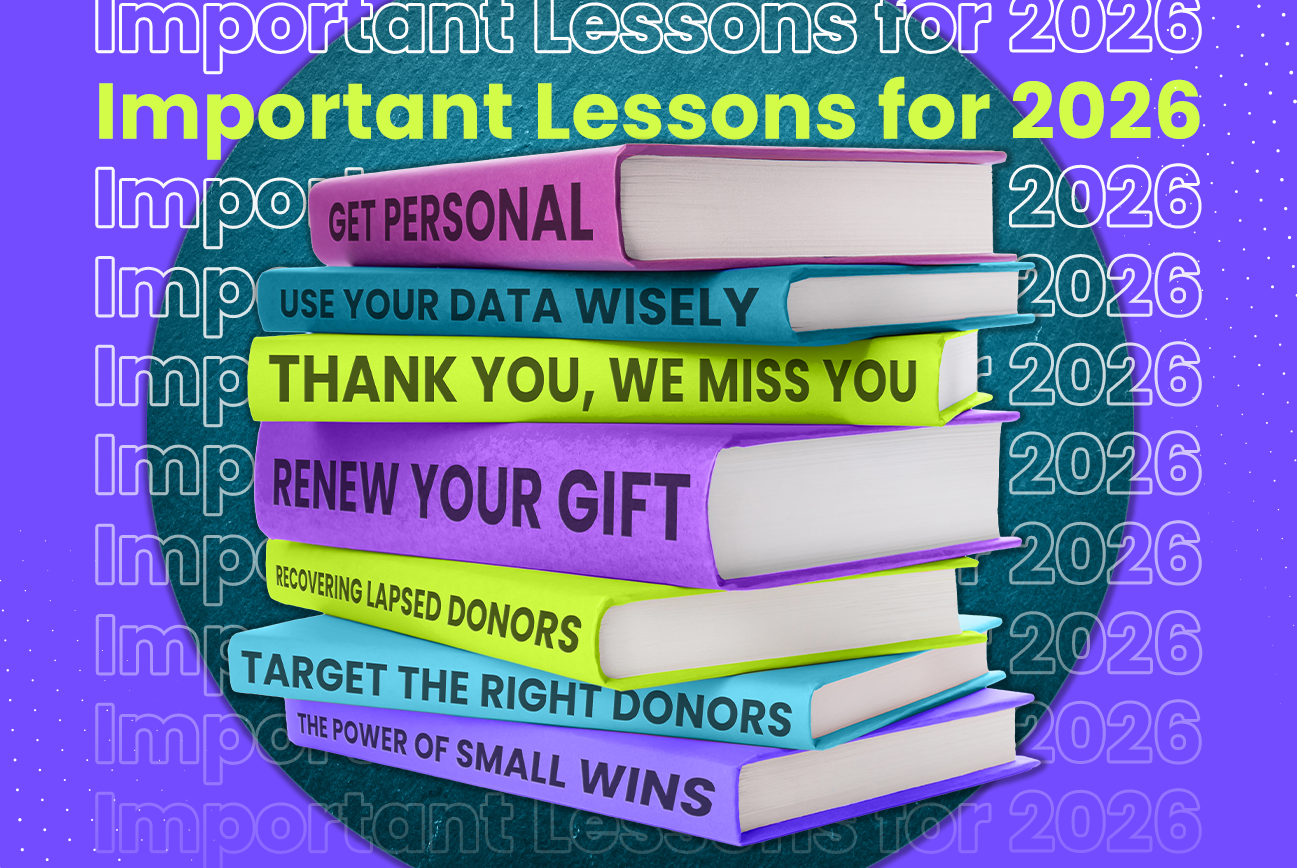
Here are the four most important lessons to carry with you into 2026.

1. Strong data makes everything easier.
2025 made it clear how much easier fundraising becomes when your donor data is organized and reliable. And it’s not all about analytics or expensive donor management software.
The most important thing is having information you can trust.
Fundraisers who maintain good data hygiene know which donors they should be talking to and when. They understand who gave last year, who tends to give only at certain times of year, who’s slipping away, and who engages consistently with emails or events.
Having this information organized and accessible helps you determine who needs a more personal touch, who might respond to a monthly giving invitation, and who’s unlikely to get back to you at all.
Too many fundraisers spend their time chasing the wrong donors and casting too wide of a net, often because they can’t interpret what their data is trying to tell them.
Data won’t solve everything. But it’s the foundation of every fundraising program that achieves more with less.
LEARN MORE: Are you keeping good data hygiene?

2. Prioritizing your most engaged donors.
The need for strong data becomes even clearer when you try to put this next fundraising lesson into practice. Throughout 2025, nonprofits used what they knew about past giving behavior to shape smarter strategies.
And what did that look like? Sometimes it meant prioritizing donors who gave more than once a year. At other times it meant concentrating on people who regularly opened emails or attended events. In some cases, it simply meant reaching out to volunteers or advocates who consistently engaged on social media.
These supporters are already paying attention. You can take a lesson from other nonprofits by identifying these individuals in your database and leaning into that existing engagement to improve your results in 2026.
Because something important happened when organizations made this shift. Instead of casting a wide net and hoping for the best, they started forming smaller, more targeted donor groups and tailoring their outreach to match what would resonate most. It reduced donor fatigue, cut down on unnecessary messaging, and created more meaningful donor experiences.
In short, it made fundraising feel manageable and more personal, even during a chaotic year.
LEARN MORE: Achieving more with less amid economic uncertainty.

3. Being more targeted with direct mail.
The role of direct mail in today’s digital age was another important fundraising lesson nonprofit professionals learned last year.
Direct mail continued to be a dependable channel, but not because organizations sent more of it. In fact, the strongest results often came from sending less.
Take the Christopher and Dana Reeve Foundation, for example. They decided to rethink their individual giving program with a smarter approach. We worked with their team to clean and prioritize their mailing list, remove duplicate records and low-response segments, and reduce the total mail volume by roughly a third.
The results spoke for themselves.
With a refreshed creative approach, stronger messaging, and a strategy centered on fewer but more targeted mailings, they achieved a 51 percent increase in annual fundraising revenue and a 130 percent boost in average gift size.
All without expanding their budget.
This shows that direct mail isn’t about sending more. It’s about sending the right messages to the right people in the right way. The Reeve Foundation’s shift from “blanket appeals” to “intentional outreach” reduced costs, improved response rates, and helped them make the most of the resources they had available.
Because less can be more, if it has more meaning.
CASE STUDY: How the Reeve Foundation revitalized their fundraising.

4. Making giving easier helps donors stay connected.
Another important fundraising lesson from 2025 was how dramatically donor behavior can shift when giving feels simple and flexible.
Economic uncertainty continued to influence how and when people gave. Some donors hesitated longer before making a gift. Others reduced their amounts or paused monthly commitments. Many simply needed a clearer understanding of where their money was going and why it mattered.
Organizations that adapted paid close attention to the donor experience.
They removed roadblocks like unnecessary steps from their donation forms while introducing flexible gift amounts and installment options. They embraced digital wallets and mobile payment tools that sped up the giving process. And they made sure their appeals clearly explained the impact of every contribution.
These small changes added up. Donors were more confident when the process felt intuitive. They were more willing to stay engaged when they felt informed and reassured. And they were more likely to give again when donating was as straightforward as any other task on their phone.
So, as you plan for 2026, take a close look at your giving experience. Donors will notice if it feels too complicated or confusing. And they’ll hesitate.
LEARN MORE: Is it easy to give to your nonprofit?
Carry these lessons with you into 2026.
2025 challenged us to rethink how we work as fundraisers. It showed us that success doesn’t come from doing everything. It comes from focusing on what keeps momentum moving forward.
Strong data gave teams the clarity they needed to make informed decisions. Prioritizing engaged donors helped stretch time and resources further. Intentional and targeted mail delivered better results than sending more. And a simpler giving experience made it easier for donors to make a difference, even in uncertain times.
You may not enter 2026 with a larger team or a bigger budget. But you can come in with a more intentional strategy. Putting these fundraising lessons into practice will help you build a more focused, resilient, and sustainable program.
And remember, success in the year ahead won’t come from doing more. It’ll come from doing what works, doing it well, and leaving the rest behind.
Click here to chat with an amplifi team member about your 2026 fundraising strategy.